 ultimate-guide
How to Set Up a Small Office Home Office for Your Business
Last Updated: October 26, 2026
Quick Summary
A small office home office is a business operated from a dedicated workspace within a residential property, typically by a self-employed individual or a very small team of one to ten employees. Unlike a personal home office, a small office home office generates revenue, serves clients, and builds an enterprise.
- Small businesses employ 62.3 million people, representing 45.9% of private-sector workers
- 59% of home buyers interested in a home office preferred a medium-sized office of 100-150 square feet
- IRS permits home office deductions when the space is used exclusively and regularly for business
- Essential furniture includes a desk, ergonomic chair, and separate monitor to reduce neck strain
- Establish a shutdown routine to prevent work from bleeding into personal time and maintain work-life balance
Table of Contents
- What Is a Small Office Home Office (SOHO Business Meaning)
- Who Operates a Small Office Home Office
- Why a Dedicated Workspace Matters for Your Small Office Home Office
- Small Home Office Layout: Planning Your Workspace
- Essential Small Home Office Furniture and Equipment
- Practical Small Home Office Ideas for Productivity and Comfort
- Setting Boundaries and Managing Work-Life Balance in Your Home Office
- Launch Your Automated Online Business from Your Home Office
- Frequently Asked Questions
What Is a Small Office Home Office (SOHO Business Meaning)
A small office home office (SOHO) is a business operated from a dedicated workspace within a residential property, typically by a self-employed individual or a very small team of one to ten employees. Unlike traditional commercial offices, a small office home office combines the flexibility of working from home with the professional structure needed to run a legitimate business.
SOHO businesses range from freelance consulting and digital services to e-commerce operations and content creation. According to U.S. Small Business Administration data on small business employment, small businesses employ 62.3 million people, representing 45.9% of private-sector workers, many of whom operate from home-based setups.
The distinction between a small office home office and a traditional home office is important. A home office might be where you handle personal finances or check emails for a full-time job. A SOHO business is where you generate revenue, serve clients, and build an enterprise.
Who Operates a Small Office Home Office
Self-employed professionals, independent contractors, and small business owners are the primary operators of SOHO businesses. This includes freelancers in writing, design, programming, and consulting; e-commerce resellers and digital product vendors; coaches and consultants offering specialized services; and content creators monetizing through multiple streams. College students and recent graduates often launch SOHO businesses to build supplementary income while maintaining flexibility. Career changers seeking low-risk entry into entrepreneurship are among the people interested in supplementary income opportunities.
The audience also includes unemployed individuals exploring automated income opportunities and budget-conscious people seeking to start an online business with minimal upfront capital.
Research shows that home buyers increasingly value dedicated workspace. Among buyers interested in having a home office, 59% preferred a medium-sized office of 100-150 square feet, while 22% preferred smaller spaces, indicating that workspace planning matters even before a business launches.
Why a Dedicated Workspace Matters for Your Small Office Home Office
Tax deductions represent another practical benefit. The IRS permits home office deductions, but taxpayers must use part of their home exclusively and regularly for business to claim the deduction, according to official guidance. A dedicated small office home office setup makes this requirement easier to document and defend during an audit.
Small Home Office Layout: Planning Your Workspace
Layout options for small spaces include the L-shaped desk configuration, which maximizes surface area without consuming much floor space; the floating desk mounted to the wall, which saves square footage and creates an open feel; and the corner workspace, which uses otherwise wasted space efficiently. Choose based on your actual workflow. If you primarily work on a computer, a simple desk suffices. If you handle paperwork, inventory, or client meetings, you'll need more surface area and storage.
Essential Small Home Office Furniture and Equipment
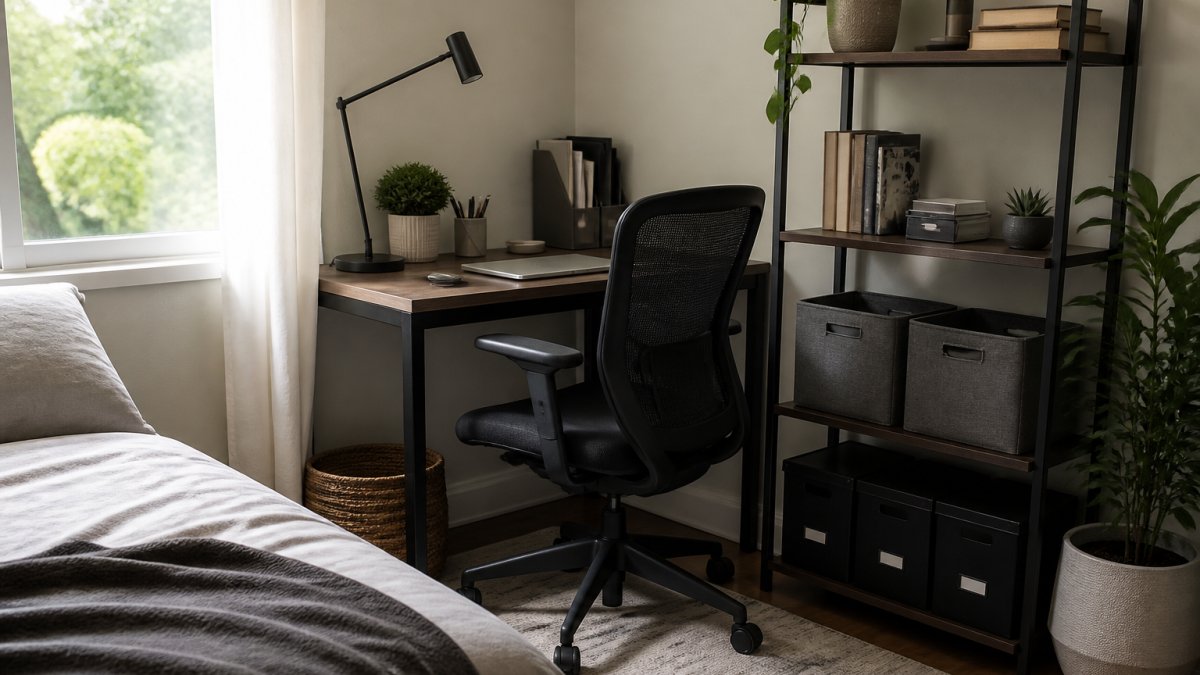
| Item | Priority | Rationale |
|---|---|---|
| Desk | Essential | Dedicated work surface separates business from personal life |
| Ergonomic Chair | Essential | Prevents injury and maintains focus during long hours |
| Monitor (separate) | High | Reduces neck strain compared to laptop-only setup |
| Storage/Shelving | High | Keeps workspace organized and professional |
| Backup Internet | Medium | Critical for automated businesses that run 24/7 |
| Lighting (task lamp) | Medium | Reduces eye strain and improves mood |
| Webcam/Microphone | Medium | Improves client perception during video calls |
Practical Small Home Office Ideas for Productivity and Comfort
Establish a shutdown routine. At the end of your workday, clear your desk, close your laptop, and physically leave your small office home office if possible. This boundary prevents work from bleeding into personal time and allows your mind to truly disconnect. For SOHO operators, this boundary is critical, without it, you're always working.
Setting Boundaries and Managing Work-Life Balance in Your Home Office
Take breaks. The small office home office model makes it easy to work through lunch or skip breaks entirely. Don't. Step outside, move your body, eat properly. A 10-minute walk or a quick stretch improves focus and prevents burnout. SOHO operators often work longer hours than traditional employees precisely because the boundary between work and home disappears. Protect your time aggressively.
Launch Your Automated Online Business from Your Home Office
Ready to explore an online business from your small office home office? With $6 Dollar Millions, you get a fully automated, income-generating mini-site that puts 100% of profits directly into your PayPal account.
This turnkey solution is designed for beginners. You receive a lifetime-owned reseller site complete with marketing and advertising materials to start selling digital packages. Sales and digital delivery are automated 24/7.
The model is legitimate, not a pyramid scheme, MLM, or matrix program. You own the site forever. You keep every dollar. Legitimate online business opportunities require clear ownership, transparent operations, and direct profit flow to the operator, and $6 Dollar Millions delivers exactly that structure.
Explore Legitimate Ways to Earn Online in 2026: 7 Proven Paths to understand how automated online business fits into your broader income strategy, or read Is Automated Online Business a Scam? 2026 Reality Check if you're still evaluating whether this model suits your goals. For deeper insight into passive income options that work from home, check out Passive Income Sites That Actually Work: 2026.
Frequently Asked Questions
What is a small office home office (SOHO)?
A small office home office (SOHO) is a business operated from a workspace within a home. SOHOs can include freelance operations and small e-commerce ventures.
What size should a small home office be?
According to home buyers surveyed about office preferences, 59% want a medium-sized home office of 100-150 square feet, while 22% prefer a smaller space. However, SOHOs can function effectively in much tighter quarters, even a corner desk in a 50-75 square foot area works if it's dedicated, well-organized, and ergonomically sound. The key is choosing a size that fits your business needs and allows comfortable, focused work without constant interruption.
How do you set up a small home office in a small space?
Start by choosing a quiet corner or room away from household traffic. Position your desk to face the door if possible, and ensure adequate natural or task lighting. Use vertical storage and floating shelves to maximize floor space. Select multifunctional furniture like a desk with built-in drawers or a wall-mounted fold-down workspace. Keep only essential equipment on your desk, store supplies in closed organizers, and maintain a clear boundary between work and living areas using a room divider or visual cue if needed.
What furniture do you need for a small home office?
Essential items include an ergonomic desk chair (non-negotiable for health), a desk sized to your space (48-60 inches works for most), a monitor arm or stand to reduce neck strain, adequate lighting, and storage solutions like shelving or filing cabinets. Add a desk organizer, cable management tools, and a small side table if space allows. Prioritize comfort and functionality over aesthetics, a cramped, poorly lit workspace will hurt productivity and your health, regardless of how it looks.
The difference between a workspace and a business is intention. A small office home office becomes profitable when you combine proper setup, clear boundaries, and a legitimate income model. $6 Dollar Millions removes the guesswork from the last piece. Order Now and start generating income from the workspace you already have.